Bollek: A Modern Interpretation of Classic Blackletter Typography
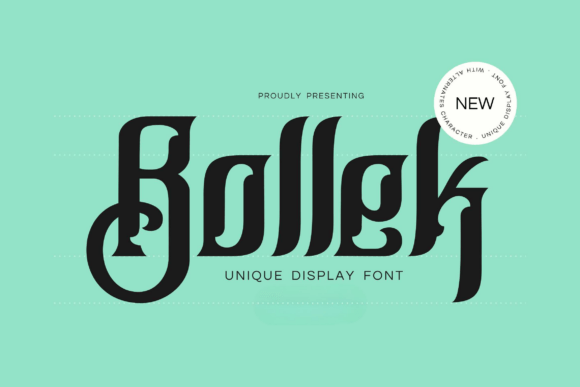
Bollek is an ornate blackletter font that bridges the gap between historical calligraphy and modern design. It combines the distinctive flair of traditional blackletter styles with a clean, geometric structure that makes it more legible and adaptable for today’s visual landscape. This balance of vintage charm and contemporary clarity positions Bollek as a versatile choice across various applications, from branding to editorial use.
What Makes Bollek Unique?
At its core, Bollek features strong vertical strokes and high contrast, which are characteristic of many blackletter fonts. However, what sets it apart is its modular and angular approach to curves. Unlike older blackletter variants that often rely on intricate flourishes and varied stroke weights, Bollek maintains a consistent rhythm and proportion through its structured form. This gives the font a sense of refinement while preserving the bold, expressive nature of blackletter typography.
The font’s design philosophy emphasizes both gravitas and clarity. While it retains the dramatic presence typical of Gothic or Textura-inspired letterforms, it avoids excessive ornamentation in favor of a streamlined aesthetic. The result is a typeface that feels both timeless and fresh, suitable for designers who want to evoke a classic look without sacrificing readability.
Strengths and Tradeoffs of Using Bollek
Bollek excels in environments where a strong typographic identity is needed but detailed embellishments might be impractical. Its high-contrast strokes and angular curves make it stand out, yet its structure prevents it from becoming too busy or difficult to read at smaller sizes. This duality allows it to serve well in both large-scale signage and tighter editorial formats like headlines or titles.
- Strengths:
- Versatile application across multiple industries (craft beverages, packaging, album covers).
- Clear, readable character shapes even in condensed forms.
- Distinctive enough to create brand recognition without being overly complex.
- Tradeoffs:
- Less suited for long blocks of body text due to its ornate nature.
- May not integrate smoothly with very minimalist or sans-serif design systems.
- Requires careful pairing to avoid overwhelming the layout.
Best-Fit Use Cases for Bollek
Bollek is particularly well-suited for projects where the typography needs to command attention. Here are some scenarios where this font shines:
- Branding and Packaging: For companies aiming to evoke tradition or heritage—especially in craft beer, wine, or artisanal products—Bollek offers a bold, memorable aesthetic. Its distinctiveness can help differentiate a product on crowded shelves.
- Signage and Wayfinding: In environments like museums, restaurants, or event spaces, Bollek’s strong verticality ensures visibility while maintaining a classic tone.
- Editorial Headlines and Titles: When used in magazine layouts, book covers, or blog headers, Bollek adds a touch of elegance and authority. Its structure supports hierarchy without distracting from the content below.
- Album Covers and Music Branding: Musicians or record labels seeking a rich, vintage feel will find Bollek ideal for creating mood and style, especially in genres like folk, jazz, or indie rock.
Comparisons: Bollek vs. Other Blackletter Fonts
Blackletter fonts come in a wide range of styles, from the highly decorative to the more restrained. Bollek sits comfortably in the middle ground, making it a good candidate for comparison with other modern blackletter designs.
Bollek vs. Traditional Blackletters
Fonts like Fraktur or Kurrent offer a deep connection to European history and script traditions. They are often used in academic or literary contexts, such as German texts or medieval manuscripts. However, these fonts can be challenging to read at small sizes and may require extensive spacing adjustments for digital use. Bollek simplifies these elements by using more uniform stroke widths and sharper angles, enhancing legibility without losing the essence of blackletter design.
Bollek vs. Contemporary Geometric Fonts
In contrast to geometric sans-serif fonts like Neue Haas Grotesk or Futura, Bollek brings a heavier, more expressive weight to the table. These modern sans-serif fonts are excellent for clean, minimal aesthetics but lack the dramatic impact of blackletter styles. Bollek provides a similar level of clarity while delivering a much stronger visual identity, making it a better fit for brands or projects that need to convey depth and character.
Limitations and Considerations
While Bollek is a powerful tool in a designer’s arsenal, it does have limitations. One key consideration is its suitability for multilingual support. Many blackletter fonts struggle with non-Latin characters, and Bollek is no exception. If your project involves languages beyond English or related Latin scripts, you may need to supplement it with another font or limit its use to specific elements like logos or headings.
Additionally, Bollek’s ornate appearance means it may not work well in all color combinations or backgrounds. High-contrast pairings—such as white on black—are often most effective, whereas pastel tones or textured surfaces could reduce its visual punch. Designers should also consider how Bollek interacts with other fonts in a typographic system; it pairs best with simpler, more neutral companions that allow it to remain the focal point.
When to Choose Bollek
Bollek is an excellent choice when you want to blend historical influence with modern usability. It’s particularly valuable in the following situations:
- Creating a logo for a brand rooted in tradition, such as a family-run distillery or a heritage clothing line.
- Designing packaging that needs to stand out in retail settings while still being easy to scan quickly.
- Producing editorial materials where a strong headline is necessary but doesn’t compromise the overall design balance.
- Developing signage for cultural or entertainment venues where atmosphere is important.
For example, a local brewery launching a new seasonal ale might use Bollek for their label’s main title. The font’s angular curves and strong verticals would echo the craftsmanship of the product while ensuring the name is clearly visible on store shelves.
When to Consider Alternatives
Despite its strengths, Bollek isn’t always the best option. If your design requires subtle, understated typography—like in corporate communications or technical documents—you might find a more neutral sans-serif or serif font more appropriate. Similarly, if you’re designing a website with limited screen real estate, the density of blackletter fonts like Bollek can cause issues with mobile responsiveness and accessibility.
Another scenario where alternatives might be better is when working within tight budgets or timelines. Some blackletter fonts include extensive glyph sets, ligatures, and alternate characters that can complicate the design process. Bollek keeps things streamlined, but if you need full linguistic support or a vast array of stylistic variations, you may need to look elsewhere.
Decision Factors for Choosing Bollek
When evaluating whether Bollek fits your needs, consider the following factors:
- Tone and Identity: Does your project benefit from a bold, historic feel? If so, Bollek can reinforce that message effectively.
- Legibility Needs: Will the font be used in small sizes or dense text? Bollek is better suited for display purposes rather than body copy.
- Target Audience: Who will see this design? Bollek appeals to audiences who appreciate classic aesthetics, but may not resonate with those expecting a modern, minimalist look.
- Technical Constraints: Are there limitations in terms of language, platform, or medium? Ensure Bollek’s character set and file format meet your project’s requirements.
- Pairing Potential: Can it coexist with other fonts in your design system? Bollek works well with simple, unembellished fonts to maintain balance.
Practical Examples of Bollek in Action
Let’s explore some real-world examples where Bollek could enhance a design:
- Craft Beverage Label: A microbrewery named “Iron Hill Ales” uses Bollek in red ink for their flagship stout label. The font complements the rustic wood textures and hand-drawn illustrations, reinforcing the product’s artisanal quality.
- Event Poster: An independent music festival called “Echoes & Echoes” employs Bollek for the event title in gold foil. The stark contrast against the dark background draws the eye immediately, while the font’s structure ensures the name remains clear and professional.
- Book Cover Design: A historical fiction novel titled “The Last Bastion” uses Bollek for the title in combination with a light gray sans-serif for the author name. This creates a layered, elegant effect that hints at the story’s time period without being overwhelming.
Alternatives Worth Considering
If Bollek doesn’t quite align with your project’s needs, several other fonts offer comparable benefits depending on your goals:
- Optima: A geometric sans-serif with a softer edge, great for high-end branding that needs a modern twist.
- Playfair Display: Offers a refined serif style with strong visual weight, ideal for editorial use where elegance is key.
- Quicksand: Provides a clean, contemporary look with excellent legibility, perfect for digital interfaces or minimalist campaigns.
- UnifrakturCook: A more elaborate blackletter option that includes extensive alternate characters and ligatures, suitable for deeper dives into traditional aesthetics.
Each of these fonts has unique advantages, and the right choice depends heavily on the context and desired outcome. Bollek, however, stands out for its ability to merge the old with the new, offering something rare in today’s fast-paced design world: a font that respects history while serving modern needs.
Final Thoughts on Typographic Fit
Selecting the right font is about understanding the role typography plays in your overall design. Bollek is not just a stylistic choice—it’s a strategic one. By choosing Bollek, you’re selecting a font that balances tradition with functionality, allowing you to communicate strength and character without sacrificing clarity.
As with any design decision, it’s essential to test Bollek in different scenarios. Try it in mockups, assess how it performs in print versus digital formats, and evaluate its compatibility with your brand voice. Only then can you determine if it’s the right match for your creative vision.